Where Can I Get the Cry, Moving and Heartbeat Mechanisms for Reborn Baby Dolls?
/https://tf-cmsv2-smithsonianmag-media.s3.amazonaws.com/filer/f3/4c/f34c1423-860e-4e83-8c8c-45ec5261e4f9/istock_000013039030_large.jpg)
Pollock'south Toy Museum is 1 of London's loveliest modest museums, a creaking Dickensian warren of wooden floors, low ceilings, threadbare carpets, and steep, winding stairs, housed in ii connected townhouses. Its small rooms firm a large, haphazard collection of antiquarian and vintage toys – tin cars and trains; lath games from the 1920s; figures of animals and people in wood, plastic, lead; pigment-chipped and faintly dangerous-looking rocking horses; stuffed teddy bears from the early xxth century; even – purportedly – a iv,000 year one-time mouse fashioned from Nile dirt.
And dolls. Dolls with "sleepy eyes", with staring, glass eyes. Dolls with porcelain faces, with "true-to-life" painted ragdoll faces, with mops of real hair atop their heads, with no pilus at all. One-hundred-and-fifty-yr-old Victorian dolls, rare dolls with wax faces. Dolls with cheery countenances, dolls with stern expressions. Sugariness dolls and vaguely sinister dolls. Skinny Dutch wooden dolls from the end of the 19th century, dolls in "traditional" Japanese or Chinese dress. One glassed-off nook of a room is crammed with porcelain-faced dolls in 19th-century article of clothing, sitting in vintage model carriages and propped up in wrought iron bedsteads, as if in a miniaturized, overcrowded Victorian orphanage.
Some visitors to the museum, notwithstanding, tin't manage the doll room, which is the last room earlier the museum'south get out; instead, they expedition all the way back to the museum'southward archway, rather than go through. "It just freaks them out," says Ken Hoyt, who has worked at the museum for more than than vii years. He says information technology'due south commonly adults, not children, who tin't handle the dolls. And it happens more oftentimes during the winter, when the lord's day goes down early on and the rooms are a bit darker. "It's like you'd call back they've gone through a haunted business firm… It's not a cracking way to end their visit to the Pollock's Toy Museum," he says, laughing, "because anything else that they would have seen that would accept been charming and wonderful is totally gone now."
A fearfulness of dolls does have a proper proper name, pediophobia, classified nether the broader fright of humanoid figures (automatonophobia) and related to pupaphobia, a fright of puppets. But most of the people made uncomfortable past the doll room at Pollock'south Toy Museum probably don't suffer from pediophobia and so much as an easy-to-express joy-off, often culturally reinforced, unease. "I call back people just dismiss them, 'Oh, I'm scared of dolls', almost humorously – 'I can't look at those, I hate them,' laughingly, jokingly. Near people come down laughing and proverb, 'I hated that last room, that was terrible,'" Hoyt says. Dolls – and it must be said, non all dolls – don't actually frighten people so much as they "pitter-patter" them out. And that is a dissimilar emotional country all together.
Come across Likewise: Read about the history and psychology of scary clowns
Dolls take been a office of human play for thousands of years – in 2004, a 4,000-twelvemonth-old stone doll was unearthed in an archeological dig on the Mediterranean island of Pantelleria; the British Museum has several examples of ancient Egyptian rag dolls, made of papyrus-stuffed linen. Over millennia, toy dolls crossed continents and social strata, were made from sticks and rags, porcelain and vinyl, and have been constitute in the easily of children everywhere. And past virtue of the fact that dolls are people in miniature, unanimated by their own emotions, it'due south easy for a society to projection whatever information technology wanted on to them: Only equally much as they could be fabricated out of anything, they could be fabricated into anything.
"I think there is quite a tradition of using dolls to reflect cultural values and how we see children or who we wish them to be," says Patricia Hogan, curator at The Strong National Museum of Play in Rochester, New York, and associate editor of the American Journal of Play. For example, she says, by the end of the 19th century, many parents no longer saw their children as unfinished adults, merely rather regarded childhood equally a fourth dimension of innocence that ought to be protected. In plough, dolls' faces took on a more cherubic, celestial wait. Dolls also have an instructional function, oftentimes reinforcing gender norms and social behavior: Through the 18th and 19thursday century, dressing up dolls gave little girls the opportunity to learn to sew or knit; Hogan says girls also used to act out social interactions with their dolls, not only the classic tea parties, but also more complicated social rituals such equally funerals as well. In the early 20th century, right around the time that women were increasingly leaving the home and entering the workplace, infant dolls became more popular, inducting immature girls into a cult of maternal domesticity. In the second half of the 20th century, Barbie and her myriad career (and sartorial) options provided girls with alternative aspirations, while action figures offered boys a socially adequate way to play with dolls. The recent glut of male child-crazy, bizarrely proportioned, hyper-consumerist girl dolls (call back Bratz, Monster High) says something about both how lodge sees girls and how girls run into themselves, although what is for another word.
So dolls, without meaning to, mean a lot. Just one of the more relatively contempo ways we relate to dolls is every bit strange objects of – and this is a totally scientific term – creepiness.
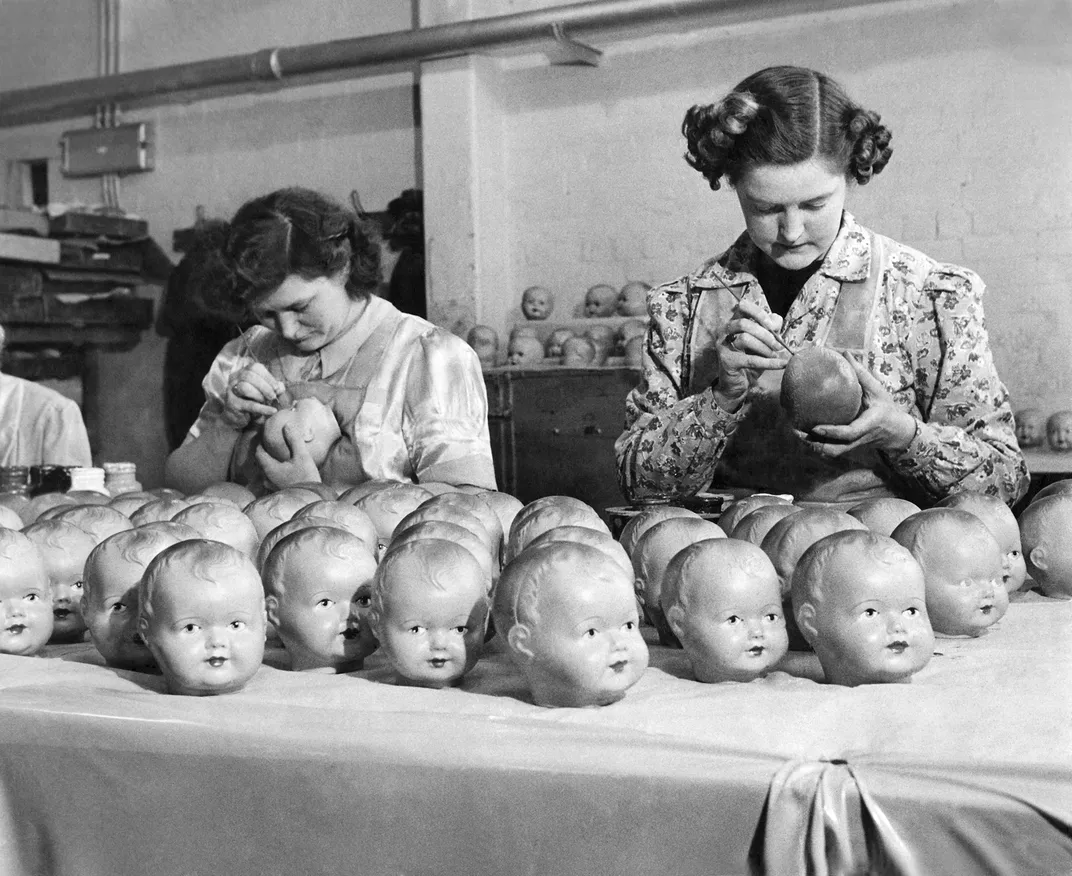
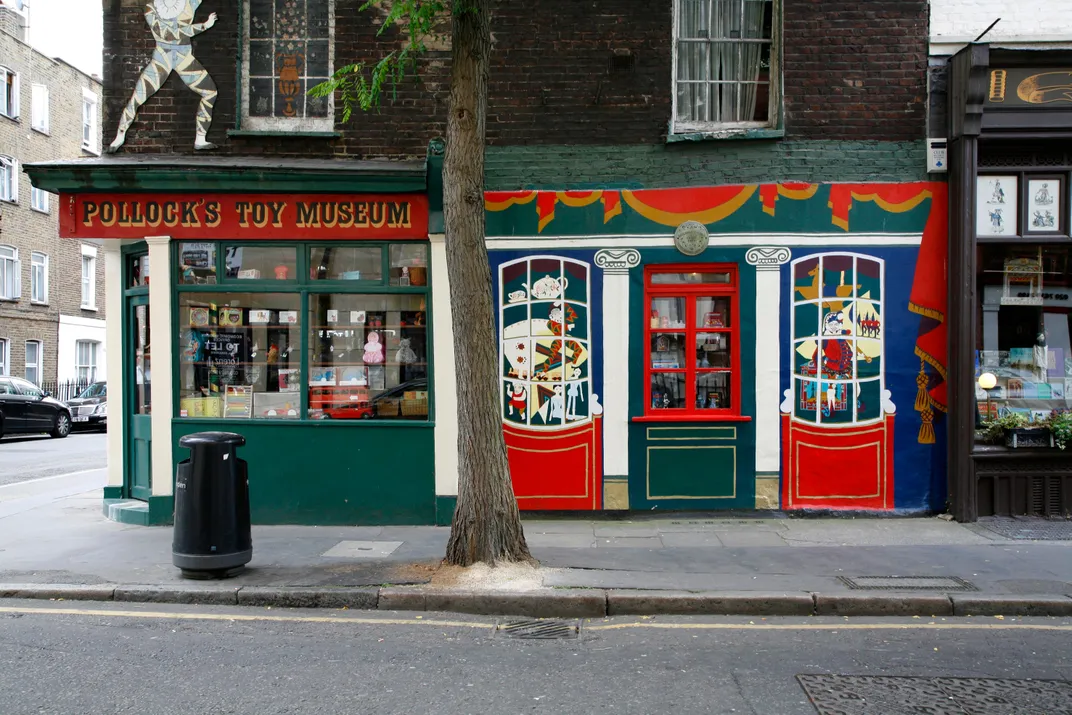
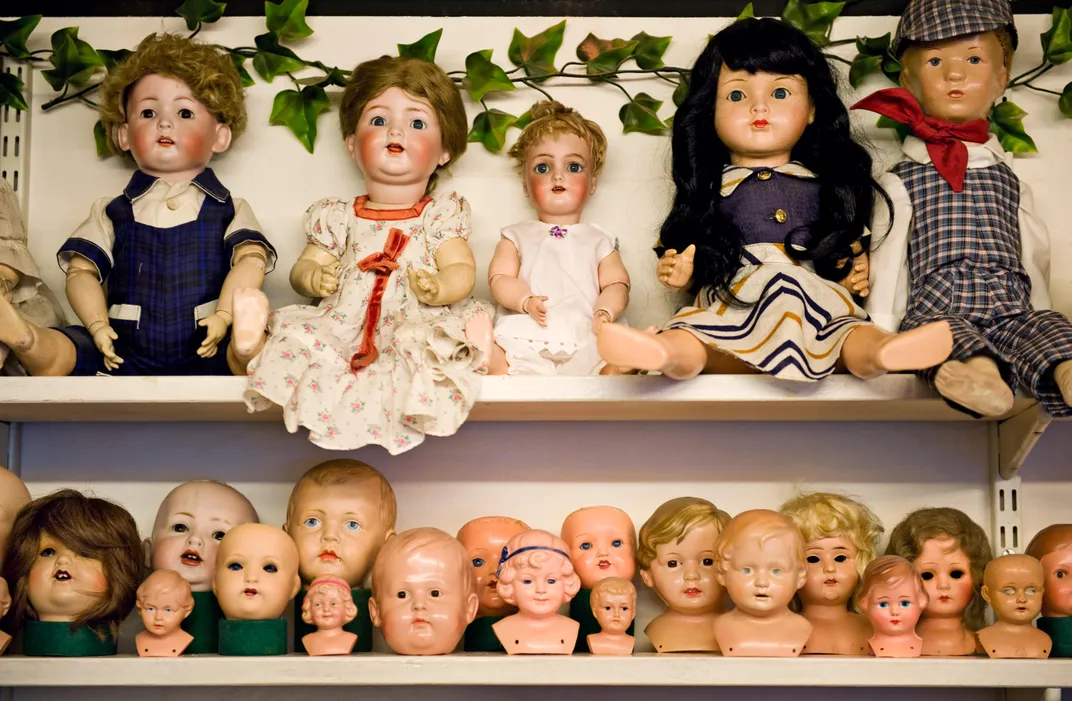
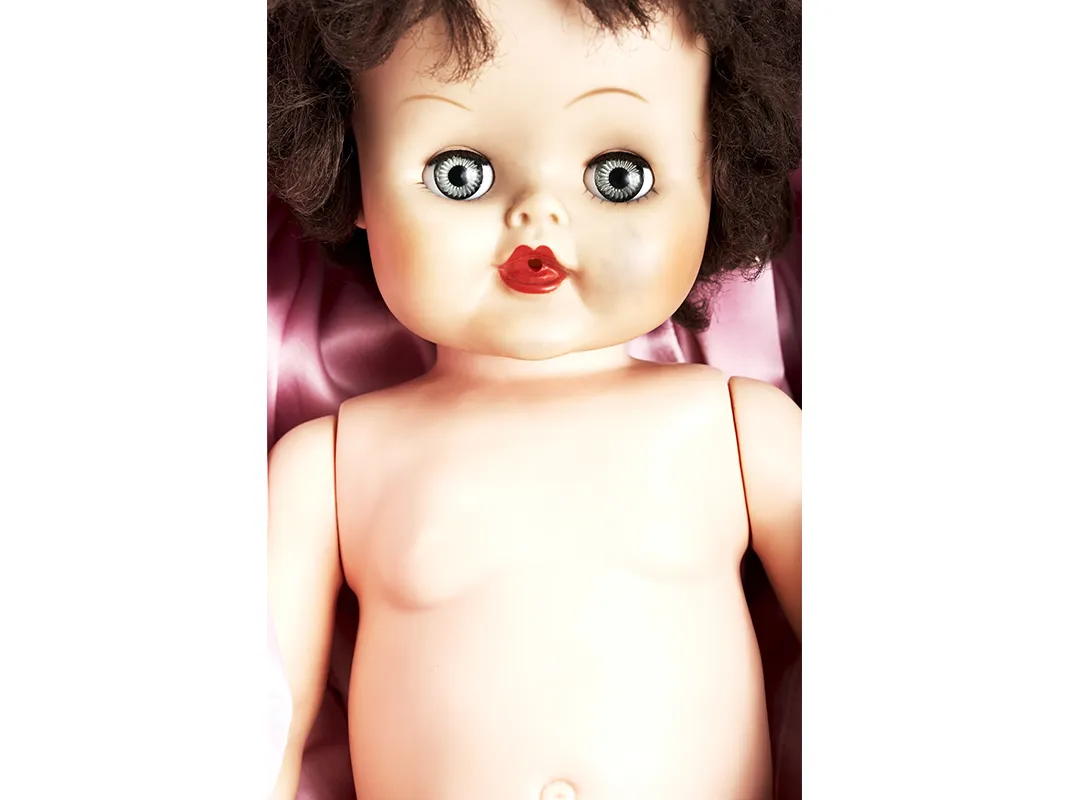
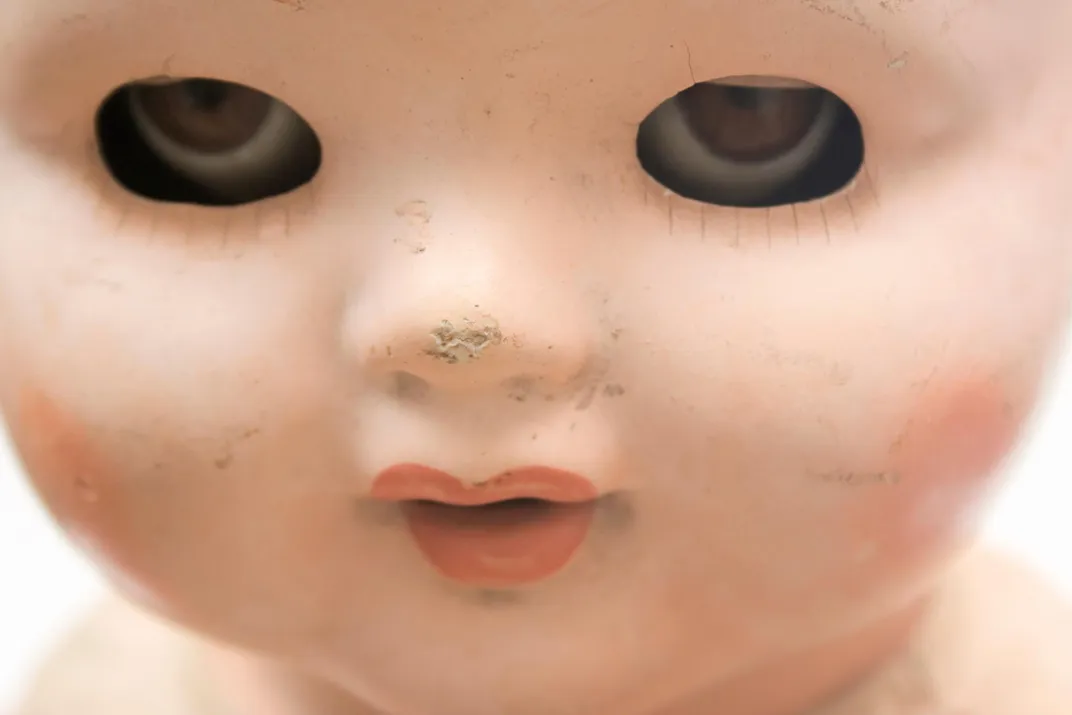
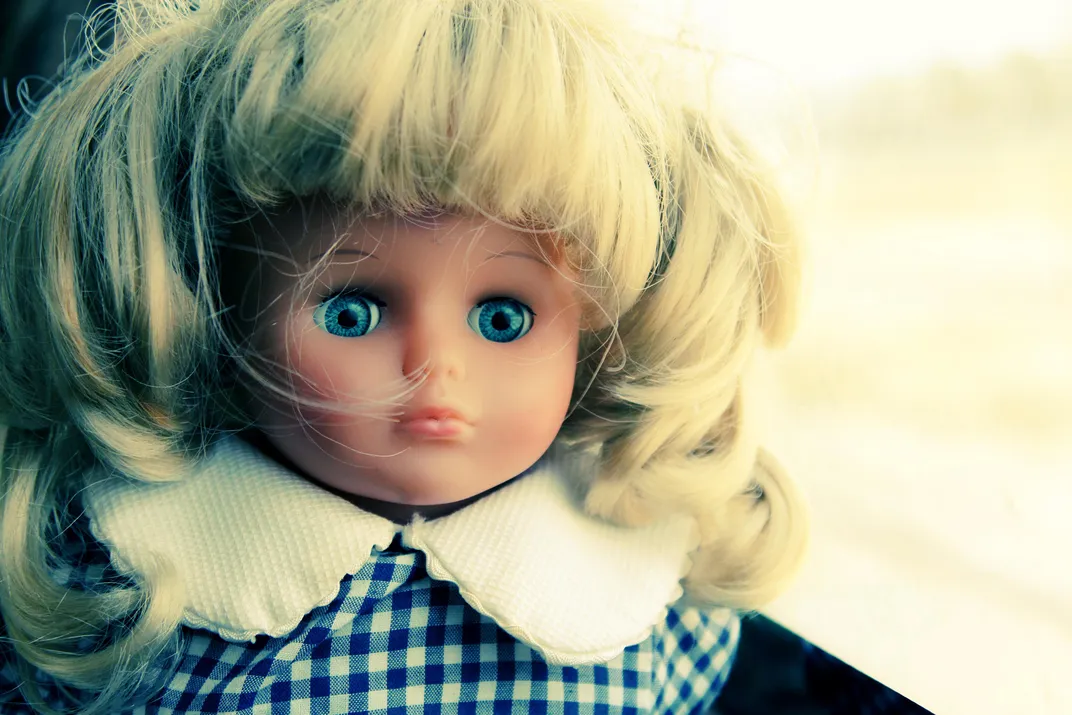
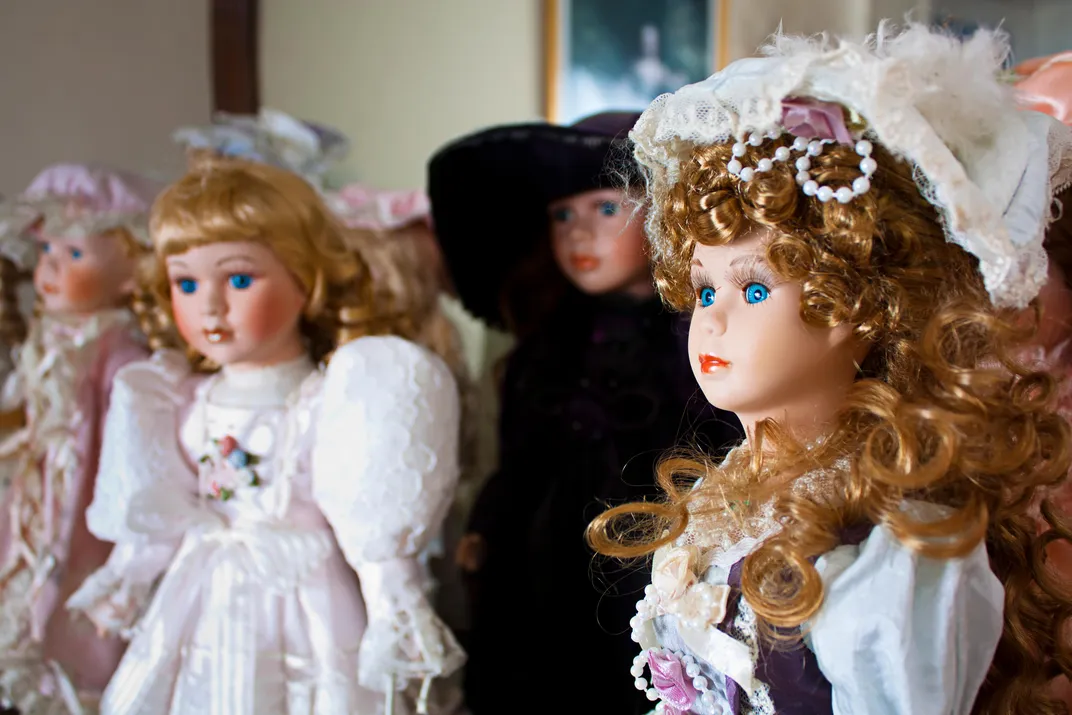
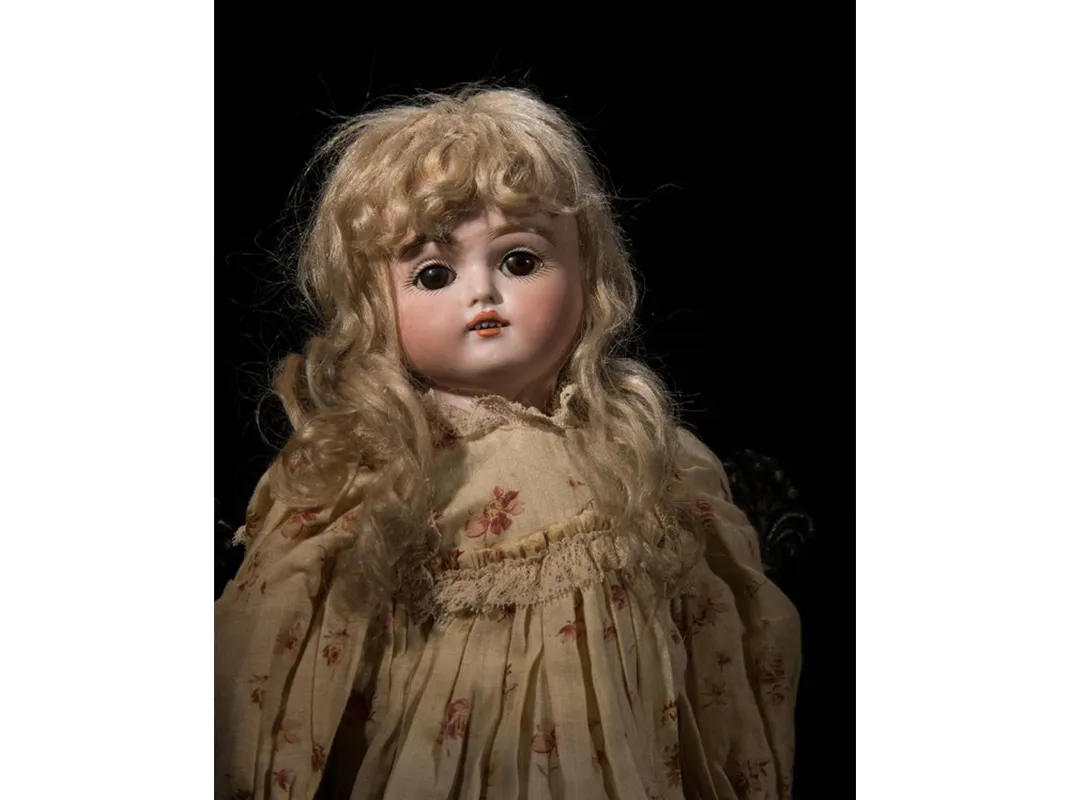
Research into why we think things are creepy and what potential utilize that might have is somewhat limited, but information technology does be ("creepy", in the modern sense of the word, has been effectually since the middle of the 19th century; its first advent in The New York Times was in an 1877 reference to a story about a ghost). In 2013, Frank McAndrew, a psychologist at Knox College in Illinois, and Sara Koehnke, a graduate pupil, put out a small newspaper on their working hypothesis about what "creepiness" means; the paper was based on the results of a survey of more than 1,300 people investigating what "creeped" them out (collecting dolls was named as one of the creepiest hobbies).
Creepiness, McAndrew says, comes down to doubtfulness. "You're getting mixed letters. If something is conspicuously frightening, you lot scream, you lot run away. If something is icky, you know how to act," he explains. "Just if something is creepy… information technology might exist dangerous but yous're non sure it is… in that location'southward an ambiguity." If someone is acting outside of accepted social norms – standing too shut, or staring, say – we become suspicious of their intentions. Only in the absence of real evidence of a threat, we await and in the meantime, call them creepy. The upshot, McAndrew says, is that beingness in a state of "creeped out" makes y'all "hyper-vigilant". "It really focuses your attention and helps yous process whatever relevant data to help you decide whether there is something to be agape of or not. I really retrieve creepiness is where we respond in situations where we don't know accept enough information to respond, simply we have plenty to put the states on our guard."
Human survival over countless generations depended on the avoidance of threats; at the same time, humans thrived in groups. The creeped out response, McAndrew theorized, is shaped by the twin forces of being attuned to potential threats, and therefore out-of-the-ordinary behavior, and of being wary of rocking the social boat. "From an evolutionary perspective, people who responded with this creeped out response did better in the long run. People who didn't might have ignored dangerous things, or they're more likely to spring to the wrong determination also rapidly and be socially ostracized," he explains.
Dolls inhabit this area of uncertainty largely considering they look man but nosotros know they are not. Our brains are designed to read faces for important information nearly intentions, emotions and potential threats; indeed, we're then primed to run into faces and respond to them that we see them everywhere, in streaked windows and smears of Marmite, toast and assistant peels, a miracle under the catchall term "pareidolia" (try not to see the faces in this I See Faces Instagram feed). Still much we know that a doll is (probable) not a threat, seeing a face that looks human being but isn't unsettles our nigh basic man instincts.
"Nosotros shouldn't be afraid of a little piece of plastic, but it's sending out social signals," says McAndrew, noting as well that depending on the doll, these signals could just as hands trigger a positive response, such as protectiveness. "They look like people but aren't people, so nosotros don't know how to respond to it, just similar nosotros don't know how to answer when we don't know whether in that location is a danger or non... the world in which we evolved how we process information, in that location weren't things like dolls."
Some researchers also believe that a level of mimicry of nonverbal cues, such as hand movements or torso language, is cardinal to smooth human interaction. The fundamental is that it has to be the right level of mimicry – likewise much or as well little and we get creeped out. In a report published in Psychological Scientific discipline in 2012, researchers from the University of Groningen in kingdom of the netherlands found that inappropriate nonverbal mimicry produced a physical response in the creeped out subject area: They felt chills. Dolls don't have the ability to mimic (although they do seem to have the ability to make center contact), but because at least function some part of our brain is suspicious nearly whether this is a human or not, nosotros may expect them to, further confusing things.
Yous can't talk about creepy dolls without invoking the "uncanny valley", the unsettling identify where creepy dolls, like their robot cousins, and before them, the automatons, reside. The uncanny valley refers to the idea that human being react favorably to humanoid figures until a indicate at which these figures go also human. At that indicate, the minor differences between the human and the inhuman – maybe an awkward gait, an inability to apply advisable heart contact or speech patterns – become amplified to the point of discomfort, unease, cloy, and terror. The idea originated with Japanese roboticist Masahiro Mori's 1970 essay anticipating the challenges robot-makers would face. Although the title of the paper, "Bukimi No Tani", is really more closely translated as "valley of eeriness", the word "uncanny" hearkens dorsum to a concept that psychiatrist Ernst Jentsch explored in 1906 and that Sigmund Freud described in a 1919 newspaper, "The Uncanny". Though the two differed in their interpretations – Freud'southward was, unsurprisingly, Freudian: the uncanny recalls our repressed fears and anti-social desires – the basic idea was that the familiar is somehow rendered foreign, and that discomfort is rooted in dubiety.
Only the uncanny valley is, for scientists and psychologists akin, a woolly area. Given the resources beingness poured into robotics, there's been more than inquiry into whether or non the uncanny valley is real, if it's even a valley and not a cliff, and where exactly it resides. Thus far, results aren't conclusive; some studies suggest that the uncanny valley doesn't exist, some reinforce the notion that people are unsettled past inhuman objects that look and human action too human. These studies are likely complicated by the fact that widespread exposure to more "natural" looking humanoid figures is on the rise through blithe films and video games. Maybe similar the Supreme Court standard for obscenity, we know uncanny, creepy humanoids when we encounter them?
But before the 18th and 19th centuries, dolls weren't real enough to be threatening. Merely when they began to look too human, did dolls start to get creepy, uncanny, and psychology began investigating.
"Doll manufacturers figured out how to better manipulate materials to make dolls look more lifelike or to develop mechanisms that make them appear to bear in ways that humans behave," says Hogan, pointing to the "sleep heart" innovation in the early 1900s, where the doll would close her eyes when laid horizontal in exactly the fashion real children don't (that would exist too easy for parents). "I think that's where the unease comes with dolls, they wait like humans and in some ways move like humans and the more convincing they wait or motion or await like humans, the more uneasy we become."
At Pollock's, the dolls that people find particularly creepy are the ones that wait more lifelike, says Hoyt; these are also the ones that have begun to decay in eerily inhuman ways. "The dolls don't age well.… I think any time that a doll really tried to wait like a human being and now is 100 years old, the hair is decomposable, the eyes don't work any more than. So information technology looks as much similar a baby as possible, simply like an ancient infant," Hoyt says.
Which presents an interesting phenomenon: The creepiness of realistic dolls is complicated by the fact that some people want dolls (and robots) that look every bit lifelike as possible. Reborns are a good illustration of the trouble; hyper-realistic, these are custom-crafted infant dolls that, reborn artists and makers say, "you lot tin can dear forever". The more than lifelike an infant doll is – and some of them even boast heartbeats, animate motion, and cooing – the more desirable it is amid reborn devotees, just equally, the more it seems to repulse the general public.
Peradventure it comes down to what nosotros can make dolls into. In A.F. Robertson's 2004 investigation into doll-collecting, Life Like Dolls: The Collector Doll Phenomenon and the Lives of the Women Who Love Them, some of the women who collected porcelain dolls thought of their dolls as alive, as sentient beings with feelings and emotions; these women who referred to their doll collections as "nurseries" were sometimes "shunned" past other antiquarian doll collectors who did non have the relationship to their ain dolls. Women – and it is most exclusively women – who collect reborns often treat them as they would real babies; some psychologists accept talked about "reborns" equally "transition objects" for people dealing with loss or anxiety. Freud may take argued that all children wish their dolls could come to life, but even so, it's non socially acceptable for adults to entertain the same desire. If we are creeped out past inanimate things that aren't human looking likewise man, we may also exist creeped out by adult humans pretending that these inanimate things are existent.
"We're creeped out past people who accept these kinds of hobbies and occupations because right away, nosotros jump to the decision, 'What kind of person would willingly surround themselves with… humanlike things that are not human?'" says McAndrew, who also noted that he and Koehnke's survey on creepiness establish that almost people think that creepy people don't realize they're creepy. "We're on our guard to those types of people considering they're out of the ordinary."
It's also exactly the kind of thing easy to exploit in media. Some doll makers blame Hollywood films for the creepy doll stigma, and there's no dubiety that moviemakers have used dolls to groovy result. But the doll was creepy well before Hollywood came calling. In the 18th and 19th centuries, every bit dolls became more than realistic and every bit their brethren, the automata, performed more than dexterous feats, artists and writers began exploring the horror of that well-nigh immediately. The tales of German writer E.T.A Hoffman are widely seen every bit the beginning of the creepy automaton/doll genre; Jentsch and Freud used Hoffman's "The Sandman," as a example study in the uncanny. The story, published in 1816, involves a traumatized young man who discovers that the object of his affection is in fact a clever current of air-upwards doll, the piece of work of a sinister alchemist who may or may not accept murdered the young homo's father; it drives him mad. The horror in this story turned on the deceptive attractiveness of the girl, rather than any innate murderousness in her; for the 19th century, creepy dolls stories tended to exist about the malevolence of the maker than the doll itself.
In the 20th century, creepy dolls became more actively homicidal, as move moving picture technology transformed the safely inanimate into the dangerously animate. Some evil dolls still had an evil human backside them:Dracula manager Tod Browning's 1936The Devil-Doll featured Lionel Barrymore every bit man wrongly convicted of murder who turns ii living humans into doll-sized assassins to wreak his revenge on the men who framed him. But then there wasThe Twilight Zone's murderous Talky Tina, inspired past one of the most popular and influential dolls of the 20th century, Chatty Cathy – "My proper noun is Talky Tina and you'd better be nice to me!"; the evil clown doll fromPoltergeist, cannily marrying two creepy memes for maximum terror; and of class, Chucky, the My Buddy clone possessed past the soul of a serial killer in theChild'southward Play series. The 1980s and 1990s saw dozens of B-motion-picture show variations on the homicidal doll theme:Dolly Dear, Demonic Toys,Blood Dolls. In 2005, the evil denizens of theDoll Graveyard came back for teenaged souls (and eyeballs, it appears); in 2007, homicidal ventriloquist dummies were going around ripping people's tongues out inDead Silence.
Most recently, devil worshippers inadvertently turned a smiling vintage doll into a grinning demon in final October'sAnnabelle, a film in theConjuring franchise. Director John Leonetti, who did not return requests for comment, told The Huffington Post that dolls made exceptional vehicles for horror films. "If you think virtually them, well-nigh dolls are emulating a man effigy," said Leonetti. "But they're missing one big matter, which is emotion. And then they're shells. It's a natural psychological and justifiable vehicle for demons to take it over. If you look at a doll in its eyes, information technology only stares. That's creepy. They're hollow within. That space needs to be filled."With evil.
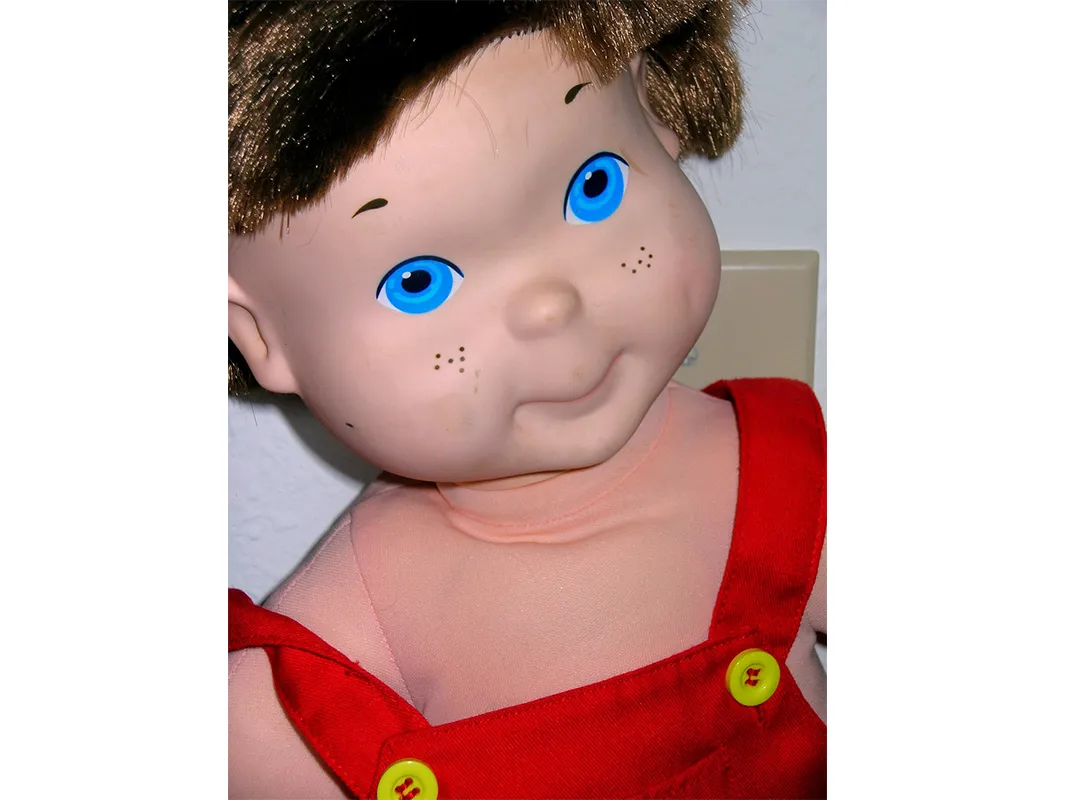
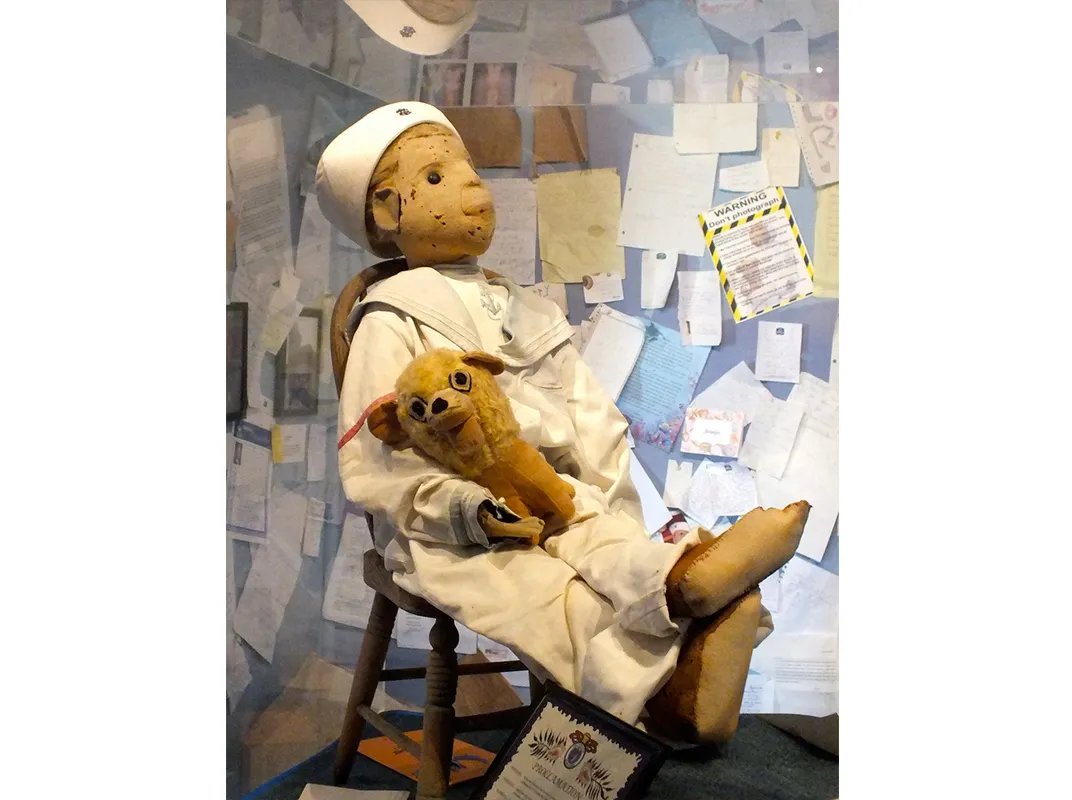
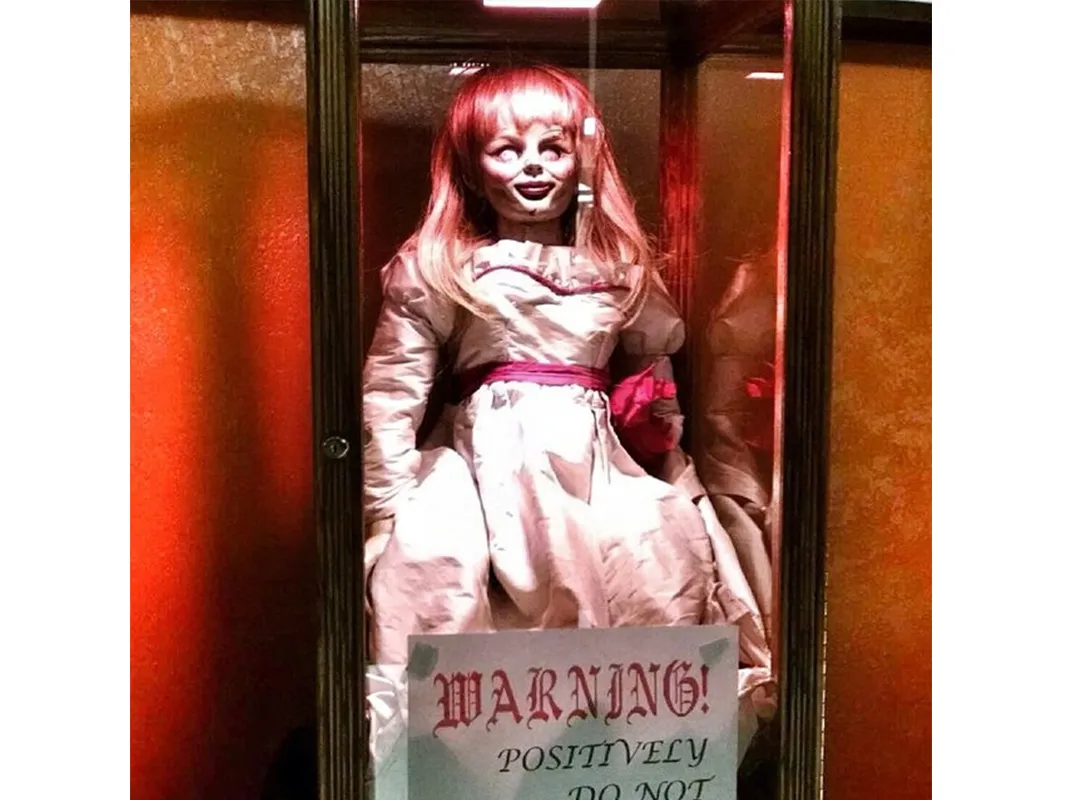
But the story of Annabelle the demonic doll, still, becomes far creepier – and more titillating – when it's accompanied by the claim that it'south "based on a true story". Paranormal investigators Ed and Lorraine Warren claimed that Annabelle the Raggedy Ann doll, whose original owners ofttimes plant her in places they hadn't left her, was beingness used by a demonic spirit in its quest to possess a homo soul; she at present lives in a especially-made demon-proof case marked "Alarm: Positively Do Not Open" at the Warren's Occult Museum in Connecticut. Annabelle is non the merely evil doll the museum alleges it houses, and at that place are many more such purportedly real-life possessed dolls effectually the world; as NPR reported in March, "Haunted dolls are a thing". Robert the Doll, the lifelong companion of an eccentric Key West artist, glowers at people from the East Martello Museum, where he's become a tiny, haunted cottage manufacture unto himself; y'all can even purchase your own replica Robert doll to blame things on. If yous are unable to visit a haunted or possessed doll in the flesh (or porcelain, every bit the case may be), then you can always watch a live feed of this rural Pennsylvania family'due south haunted doll collection. These stories, like the stories of real live clowns who murdered, feed into a narrative that makes dolls scary.
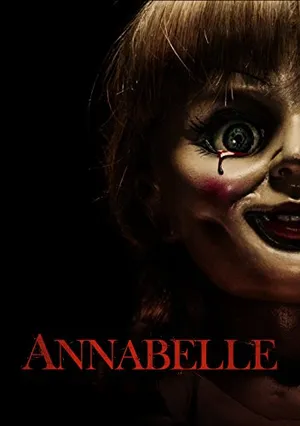
Annabelle (2014)
John has found the perfect gift for his wife, Mia: a beautiful, rare vintage doll. But Mia's delight with Annabelle the doll doesn't last long.
It doesn't appear that the creepy stigma increasingly attached to dolls, nor the bevy of scary doll films, has done anything to actually impairment sales of dolls in the United states of america. While sales of dolls in 2014 were lower than they had been 10 years earlier, the figures were notwithstanding in the billions of dollars – $two.32 billion to be exact, outstripping sales of vehicular toys, action figures, arts and crafts, and costly toys, and 2d simply to outdoors and sports toys sales. it hasn't put a damper on the secondhand and collectible doll market, where handmade porcelain dolls regularly fetch in the thousands of dollars. In September 2014, a rare Kämmer & Reinhardt doll from the early 1900s was auctioned off for an unbelievable £242,500 ($395,750); the report suggested the buyernot meetAnnabelle, which was due to exist released soon subsequently.
The creepiness of dolls sometimes adds to their appeal; some doll makers are actively courting creepy, such as this reborn artist who sells "monster" babies alongside regular babies, or the popular and scary Living Dead Dolls line. Because the fact is, peoplelike creepy. The aforementioned mechanism that makes us hyper-vigilant as well keeps usa interested: "We're fascinated and enthralled and little on edge considering we don't know what comes next, but nosotros're not in whatsoever fashion paralyzed past it," muses Hogan. "We're more drawn into it, which I recall it's that drawing in or about existence the nether spell of wanting to notice out what comes next is what good storytellers exploit."
And, perhaps, good doll makers, too?
Source: https://www.smithsonianmag.com/history/history-creepy-dolls-180955916/
0 Response to "Where Can I Get the Cry, Moving and Heartbeat Mechanisms for Reborn Baby Dolls?"
Post a Comment